Showing posts with label Ramadan Tradition (Sunnah). Show all posts

Qiyam al-Layl During Ramadan


Often, we find that people get confused with the various names associated with the night prayers. This article today will help you understand what the night prayer is about (called the Qiyaam al-Layl).


What is Qiyaam al-Layl?


Different Names:

Qiyam means 'standing' and ‘Qiyam al-Layl’ means 'standing at night'. In the Shari’ah term both terms refer to 'the voluntary night prayer, whose time extends after the Isha prayer (the last of the five obligatory prayers, whose time extends from the disappearance of the reddish light in the sky until the middle of the night) until dawn.’


This voluntary prayer is described as Qiyam al-Layl because it involves long standings, in which long portions of the Qur'aan are recited. Other common names for this prayer are 'Salaat al-Layl' (the night prayer), Tahajjud (from hajjada meaning awake at night), witr and Taraweeh (resting). [Lisaan ul-Arab under 'Hajada' and 'Rawaha']


Its should be noted that Tahajjud is not different from Qiyam and Taraweeh, these are different names of the same prayer. Commonly the word Taraweeh is used to describe this prayer in Ramadaan, the Muslims used this term from early times. Muhammad Shaqrah says: “The reason for this name is that due to long recitation the people used to rest after every four rak'ah. Eventually this practice became a necessary element of Taraweeh even with short recitations. This led people to think that ‘Taraweeh’ is the correct name revealed to Allah's Messenger (sallallahu alaihi wa-sallam).” [Irsad us-Sari p.75-77]


This name is wrong in text and in meaning. This name is neither known from Allah’s Messenger (sallallahu alaihi wa-sallam) nor his companions t… and as for the meaning the Prophet (sallallahu alaihi wa-sallam) never taught the practice of resting between particular rak’ahs. Thus, Taraweeh is a novel name and it is better to use the name which the Messenger of Allah (sallallahu alaihi wa-sallam) used for this prayer; ‘Qiyaam’.


One might ask, 'Is it wrong to rest between rak’ahs?’ The answer is - 'If the Imaam is tired or feels that the people praying behind him are tired from long standing and recitation, he may allow some rest…” [Irshad us-Sari (p: 75-77)]


The Excellence of Qiyaam al-Layl


Many Qur'aanic verses speak about the excellence of Qiyam and the merits of those people, who perform Qiyaam al-Layl on a regular basis, for example, Allah describes the believers who deserve Jannah saying: “They (the believers) forsake their beds, to invoke their Lord in fear and hope; and they spend out of what We have bestowed on them.” [Soorah as-Sajdah (32): 16] “They (the pious) used to sleep but little at night.” [Soorah ath-Thariyat (51): 17] Also, numerous Ahadeeth add to this subject, narrated Abu Hurayrah (radhi allahu anhu): “The Messenger of Allah (sallallahu alaihi wa-sallam) said: “The best prayer after those prescribed is (the prayer performed) in the depth of night.” [Saheeh Muslim and Musnad Ahmad]


He (sallallahu alaihi wa-sallam) also said: “The most beloved prayer to Allah was of Dawud (alaihi as-salaam). He slept one half of the night, got up (and prayed) for one third, and then slept (the remaining) one sixth.” [Saheeh al-Bukharee and Saheeh Muslim]


Protection from Shaitaan


Abu Hurayrah (radhi allahu anhu) reported that the Messenger of Allah (sallallahu alaihi wa-sallam) said: “When one of you goes to sleep, Shaitaan ties three knots over the rear of his head, blowing into each knot, 'You have a long night, so sleep on.” If he wakes up and mentions Allah, one knot loosens. If he makes wudhu (ablution for prayer), another knot loosens and if he prays, the third knot loosens and he becomes lively and good-natured; otherwise he gets up ill-natured and lazy.” [Saheeh al-Bukharee and Saheeh Muslim]


Acceptance of Supplication


Abu Hurayrah (radhi allahu anhu) reported that the Messenger of Allah (sallallahu alaihi wa-sallam) said: “Our Lord descends every night to the lowest heaven, when only one third of the night has remained. He says: “Who will invoke Me, so that I may give him? Who will seek My forgiveness, so that I may forgive him.” [Saheeh al-Bukharee and Saheeh Muslim] In another report, he adds: “Then Allah extends His Hand and says: “Who wants to invest (good deeds) with the One who is not wasteful or unjust?” He continues to say this until the dawn arrives.” [Saheeh Muslim]


Jabir (radhi allahu anhu) reported, the Messenger of Allah (sallallahu alaihi wa-sallam) saying: “There is an hour of the night which no Muslim person encounters and asks for a good thing for this life or the Hereafter, but Allah grants it to him. This happens every night.” [Saheeh Muslim]


Abu Umamah (radhi allahu anhu) reported that the Prophet (sallallahu alaihi wa-sallam) was once asked: “When are the supplications most acceptable?” He (sallallahu alaihi wa-sallam) replied: “In the last depth of the night and at the end of the prescribed prayers.” [(hasan) by Shaikh al-Albanee (at-Tirmidhee)]


Muadh bin Jabal (radhi allahu anhu) reported that Allah's Messenger (sallallahu alaihi wa-sallam) said: “Whenever a Muslim goes to bed in a pure state (with wudhu), falls asleep while mentioning Allah and then wakes up during the night and asks Allah for anything good, He grants it to him.” [(saheeh) by Shaikh al-Albanee (Musnad Ahmad and at-Tirmidhee)]


Closeness to Allah


Amr bin Abash (radhi allahu anhu) reported that Allah's Messenger (sallallahu alaihi wa-sallam) said: “The closest that a servant is to his Lord, is in the last part of the night. If you can be among those who remember Allah at that hour then do so.” [(saheeh) by Shaikh al-Albanee (at-Tirmidhee)]


Mercy from Allah: Abu Hurayrah (radhi allahu anhu) reported that the Messenger of Allah (sallallahu alaihi wa-sallam) said: “May Allah have mercy on a man who wakes up at night, prays and wakes his wife to pray; and if she refuses, he sprinkles water on her face. And may Allah have mercy on a woman who wakes up at night, prays, and wakes her husband to pray and if he refuses, she sprinkles water on his face.” [(hasan) by Shaikh al-Albanee (Abu Dawood)]


Constant deeds guarantee ample reward: Aa'ishah (radhi allahu anha) said: “Do not ever stop praying Qiyam. The Prophet (sallallahu alaihi wa-sallam) never ceased praying it. When he was sick or weak, he prayed sitting.” [(saheeh) by Shaikh al-Albanee (Abu Dawood)]


She also reported the Messenger of Allah (sallallahu alaihi wa-sallam) saying: “The most beloved deeds to Allah are the most constant, even if they were little.” [Saheeh al-Bukharee and Saheeh Muslim]


The Excellence of Qiyam in Ramadan


Many Ahaadeeth describe the excellence of Qiyam particularly in Ramadan, some of them are:


Forgiveness of sins: Abu Hurayrah (radhi allahu anhu) reported: “Allah's Messenger (sallallahu alaihi wa-sallam) encouraged the people, without making it an absolute command, to perform Qiyam during Ramadaan. He (sallallahu alaihi wa-sallam) used to say: “Whoever stands (in Qiyam) in Ramadaan out of faith and expectation (of Allah's Reward), all his previous sins will be forgiven.” [Saheeh al-Bukharee and Saheeh Muslim]


Among the Most Righteous: Amr bin Murrah al-Juhani (radhi allahu anhu) said: “A man from the tribe of Quraysh asked the Messenger of Allah (sallallahu alaihi wa-sallam): “O Messenger of Allah (sallallahu alaihi wa-sallam)! What if I testified that there is no (true) god except Allah and that you are Allah's Messenger, prayed the five prayers, fasted the month, stood for Qiyam in Ramadaan and paid Zakaah?” The Prophet (sallallahu alaihi wa-sallam) replied: “Anyone dying like this will be among the siddiqun (the highly virtuous) and the shuhadah (martyrs).” [(saheeh) Ibn Khuzaymah and Ibn Hibban]


7 Practical Tips for praying Qiyaam al-Layl


1: Ikhlas (Sincerity) - the key to Allah's Help and Blessings


Help of Allah is needed to accomplish and achieve success in all our affairs. And Allah only helps those who are sincere in their hearts. The Messenger of Allah (sallallahu alaihi wa-sallam) said: “If you are truthful with Allah, then Allah will deliver to you what you wish for.” [An-Nasa'ee, al-Hakim and Saheeh al-Jamee] Therefore, one should have a sincere intention to pray Qiyaam al-Layl; seek the Pleasure of Allah Alone and avoid the desire of praise or fame. Allah says: “And they were commanded not, but that they should worship Allah, and worship none but Him Alone…” [(98): 5]


Imam Ibn al-Qayyim said: “The degree to which a person is helped and aided by Allah depends on the degree of his intention, drive, aim and hopes. Help from Allah comes to people in proportion to their drive, intention, hopes and fears, and failure comes to them in like manner.”


2: Knowing the Virtues of Qiyaam al-Layl


Knowing the virtues and rewards of performing worship produces willingness and desire to perform the worship. We have previously mentioned numerous virtues of regularly praying Qiyaam al-Layl, here we mention the excellence of praying Qiyaam al-Layl particularly in the great month of Ramadan. Abu Hurayrah (radhi allahu anhu) reported: “Allah's Messenger (sallallahu alaihi wa-sallam) encouraged the people, without making it an absolute command, to perform Qiyaam during Ramadan. He (sallallahu alaihi wa-sallam) used to say: “Whoever stands (in Qiyaam) in Ramadan out of faith and expectation (of Allah's reward), all his previous sins will be forgiven.” [Saheeh Muslim]


3: Taking a nap in the daytime


Taking a nap before or after Dhur Salaat will dismiss the stress and thus enable one to get up in the night and stand in front of his Lord. The Messenger of Allah (sallallahu alaihi wa-sallam) said: “Take a nap, for the Shayateen (pl. of Shaytan) do not take naps.” [Reported by at-Tabaranee. Al-Saheehah (2647)]


4: Sleeping according to the Sunnah of Allah's Messenger


(a) Sleep early: Sleeping early is a healthy habit and it was the practice of Allah's Messenger (sallallahu alaihi wa-sallam) to sleep directly after performing the Isha prayer. Abu Barzah al-Aslami (radhi allahu anhu) said that the Prophet (sallallahu alaihi wa-sallam) used to prefer to delay Isha, and he did not like to sleep before it or talk after it.” [Saheeh al-Bukharee]


(b) Sleep in a state of taharah (purity): Ibn Abbas (radhi allahu anhu) reported that Allah's Messenger (sallallahu alaihi wa-sallam) said: “Purify these bodies and Allah will purify you, for there is no slave who goes to sleep in a state of purity but an Angel spends the night with him, and every time he turns over, [the Angel] says, 'O Allah! Forgive Your slave, for he went to bed in a state of purity.'” [Reported by at-Tabaranee. See Saheeh al-Jamee (3831)]


(c) Choose a suitable bed: Excessive luxurious or soft bed provokes laziness and makes one sleep more and become negligent. Aa'ishah (radhi allahu anha) narrates that the pillow of the Prophet (sallallahu alaihi wa-sallam) on which he slept at night was made of leather stuffed with palm fibers.” [Abu Dawood and Musnad Ahmad. Saheeh al-Jamee (4714)]


Once Umar Ibn al-Khattab (radhi allahu anhu) entered upon the Messenger of Allah (sallallahu alaihi wa-sallam) when he was lying on a mat of palm fibers that had left marks on his side. Umar (radhi allahu anhu) said: “O Messenger of Allah, why do you not get something more comfortable than this?” He (sallallahu alaihi wa-sallam) said: “What do I have to do with this world? My relationship with this world is like that of a traveler on a hot summer's day, who seeks shade under a tree for an hour, then moves on.” [Musnad Ahmad and al-Hakim. Saheeh al-Jamee (5545)]


(d) Cleaning the bed and lying on the right side

Abu Hurayrah (radhi allahu anhu) reported: “The Prophet (sallallahu alaihi wa-sallam) said: “When any one of you goes to bed, let him clear his bed by hitting it with his garment, for he does not know what may have come onto it. Then let him lie down on his right side…” [Saheeh al-Bukharee and Saheeh Muslim]


(e) Reciting the Adhkaar (supplications) mentioned in the Sunnah before sleeping

There are a number of Adhkaar prescribed in the Sunnah before going to bed, amongst them are reciting the last verses of Soorah al-Baqarah, reciting Soorah al-Falaq and Soorah al-Nas and Soorah Ikhlas blow in the palms and wipe as much of the body possible, starting from the head, face and then the front of the body doing it three times. [Saheeh al-Bukharee and Saheeh Muslim]


Ali Ibn Abi Talib (radhi allahu anhu) reported that when the Prophet's daughter, Fatima (radhi allahu anha) came to him and asked him for a servant, he (sallallahu alaihi wa-sallam) said to her and Ali: “Shall I not teach you something that will be better for you than a servant? When you go to bed, say 'SubhanAllah' thirty-three times, 'Al-hamdulillah' thirty-three times, and 'Allahu Akbar' thirty-four times. This is better for you than a servant.” [Saheeh al-Bukharee and Saheeh Muslim]


5: Avoid too much food and drink


Too much food or drink is one of the main obstacles that make one lazy and negligent of Qiyaam al-Layl. The Messenger of Allah (sallallahu alaihi wa-sallam) said: “Man fills no vessel worse than his stomach. It is sufficient for the son of Adam to have a few mouthfuls to give him the strength he needs. If he has to fill his stomach, then let him leave one-third for food, one-third for drink and one-third for air.” [Reported by at-Tirmidhee and Ibn Majah. Saheeh al-Jamee (5674)]


Abu Juhayfah (radhi allahu anhu) reported that the Prophet (sallallahu alaihi wa-sallam) said to a man who burped in his presence: “Stop your burping, for the people who eat the most in this life will be the most hungry on the Day of Resurrection.” [Reported by al-Hakim. Saheeh al-Jamee (1190)]


6: Striving against oneself:


Striving against oneself to get up and pray and suppressing one's desires bring about Allah's help and His Pleasure for the slave. Allah says in the Qur'aan: “Strive in Allah's Cause as you ought to strive…” [Soorah al-Hajj (25): 78] “And as for those who strive hard in Our Cause, We will surely guide them to Our Paths. And verily, Allah is with the Muhsinoon (good-doers).” [ (29): 69]


The Prophet (sallallahu alaihi wa-sallam) said: “The Mujahid (one who strives in way of Allah) is the one who strives against his own self for the sake of Allah.” [Reported by al-Tirmidhee. See al-Saheehah (549)]


He (sallallahu alaihi wa-sallam) also said: “When a man from my Ummah gets up to pray at night, striving against his own self to get up and purify himself, there are knots on him. When he washes his hands in wudhu, one knot is undone. When he washes his face, another knot is undone. When he wipes his head another knot is undone. When he washes his feet, another knot is undone. Then Allah says to those who are veiled (in the Unseen):'Look at this slave of Mine, he is striving against his own self and asking of Me. Whatever My slave asks of Me shall be his.” [Musnad Ahmad. See Saheeh al-Targheeb (627)]


7: Rebuking one's self for not praying Qiyaam al-Layl


Qiyaam al-Layl is a great blessing from Allah, the Exalted, and He has placed in it numerous spiritual benefits and rewards for the believer. Therefore, one should rebuke one's self, if he misses this great opportunity of achieving rewards and Pleasure of Allah. Allah says in the Qur'aan: “O you who believe! Fear Allah and keep your duty to Him. And let every person look to what he has sent forth for the morrow, and fear Allah. Verily, Allah is All-Aware of what you do.” [(59): 18]

Imam Ibn al-Qayyim (rahimahullah) said: “If the slave is responsible and accountable for everything, even his hearing, sight and innermost thoughts, as Allah says, “…Verily, hearing, sight, and the heart of each of you will be questioned by Allah.” [Soorah al-Isra (17): 36], then he should check on himself before he is brought to account.”


Source:

The Night Prayers’ by Muhammad Nasir ud-Deen al-Albanee (rahimahullah)

As-Sunnah Islamic Newsletter Issue 15


Night Prayers During Ramadan

Night Prayer in Ramadan

Excerpted from: Ahadith al-Siyam

by al-Fawzaan


It was narrated from Abu Hurayrah that the Messenger of Allah (peace and blessings of Allah be upon him) said: "Whoever prays at night in Ramadan out of faith and in the hope of reward, his previous sins will be forgiven." (al-Bukhari; Muslim)


This hadith is indicative of the virtue of praying qiyam in Ramadan, and shows that this is one of the means of forgiveness of sin. Whoever prays Taraweeh as it should be prayed has prayed at night (qiyam al-layl) in Ramadan.


Forgiveness is conditional upon "faith and hope of reward," as stated here. What is meant by "faith" is that when the person stands to pray qiyam, he believes in Allah, may He be exalted, and believes in His promise and in the virtue of praying qiyam, and in the greatness of its reward with Allah. "Hope of reward" means that he is seeking the reward from Allah and is not doing it for any other purpose such as showing off, etc.


It was narrated that Abu Hurayrah (may Allah be pleased with him) said: The Messenger of Allah (peace and blessings of Allah be upon him) used to encourage them to pray qiyam during Ramadan, without commanding them to do it. Then he said: "Whoever prays at night in Ramadan out of faith and in the hope of reward, his previous sins will be forgiven."


So the Muslim should be keen to pray Taraweeh, and should be patient in completing the prayer with his imam. He should not neglect any part of it, or leave before his imam, even if his imam does more than eleven or thirteen rak'ahs, because the Prophet (peace and blessings of Allah be upon him) said: "Whoever prays qiyam with the imam until he finishes, it will be recorded that he spent the night in qiyam." It is only a few nights, which the wise man makes the most of before they are gone.


Abu Dawud said: It was said to [Imam] Ahmad while I was listening: "Can qiyam - i.e., Taraweeh - be delayed until the end of the night?" He said: "The way of the Muslims is dearer to me."


If a person is keen to pray whatever rak'ahs he wants to at the time of the pre-dawn (suhoor time), then he should not pray witr again at the end of his prayer, rather it is sufficient for him to pray witr with his imam in Taraweeh, because of the hadith of Talq ibn 'Ali (may Allah be pleased with him) who said: The Messenger of Allah (peace and blessings of Allah be upon him) said: "There cannot be two witrs in one night."


With regard to the hadith of Ibn 'Umar (may Allah be pleased with him) - according to which the Prophet (peace and blessings of Allah be upon him) said: "Make the last of your prayers at night witr" - this is to be understood as referring to one who prays at the end of the night and did not pray witr at the beginning of the night.


The command here is to be understood as a recommendation, not an obligation. It is not essential to conclude the prayer at the end of the night with witr, based on the fact that the Prophet (peace and blessings of Allah be upon him) prayed at the end of the night, after his witr.


Abu Dawud said: I said to Ahmad: "Does praying after witr invalidate witr?" He said: "No." Abu Dawud said: I heard Ahmad say concerning one who prayed witr at the beginning of the night then got up to pray qiyam: "He should pray two rak'ahs."

It was said: "Does he not have to pray witr?"

He said: "No."

He said: I heard someone ask him about someone who wanted to pray after witr: "should he pray two by two?"

He said: "Yes, but after witr he should lie down."


The imam should take care to pray properly in Taraweeh. He should pray with proper focus and humility, reciting in a proper manner and being at ease in ruku' and sujud. He should beware of rushing lest he fails to attain the proper level of khushu' (focus and humility) and lest he make the weak, elderly and sick among the people behind him get too tired.


Al-Sa'ib ibn Yazeed said: 'Umar ibn al-Khattab commanded Ubayy ibn Ka'b and Tameem al-Dari to lead the people in praying eleven rak'ahs of qiyam. He said: The reciter used to recite the surahs that contain more than a hundred verses, until we would lean on sticks because of having to stand for so long, but we did not leave until dawn was approaching.


When the worshiper has said the tasleem at the end of witr, he should say: Subhan al-Malik al-Quddus (Glory be to the Sovereign, the Most Holy) three times, elongating the vowels and raising his voice the third time, because it is proven that the Prophet (peace and blessings of Allah be upon him) did that.


O Allah, accept this (worship) from us, for You are the All-Hearing, All-Knowing, and accept our repentance, for You are the Acceptor of Repentance, the Most Merciful

8 Recommended Acts While Fasting

The number of beneficial acts that we can perform during Ramadan is limitless. But there are 8 acts that should, at a minimum, be performed during Ramadan.

The following are recommended (mustahab) acts of fasting that should be performed during the month of Ramadan:

1. SUHUR

The suhur is the pre‐dawn meal (which should be taken before the beginning of Fajr). Anas, may Allah be pleased with him, narrated that the Messenger of Allah, said: “Take the suhur for there is blessing in it.” (Bukhari & Muslim)

Abu Sa’id Al‐Khudri, may Allah be pleased with him, narrated that the Messenger of Allah, said: “The suhur is a meal of blessings, so do not leave it, even if one of you just takes a [gulp] of water, since Allah sends mercy and His angels who seek forgiveness for those who take suhur.” (Ahmad)

2. HASTENING TO BREAK THE FAST (IFTAR)

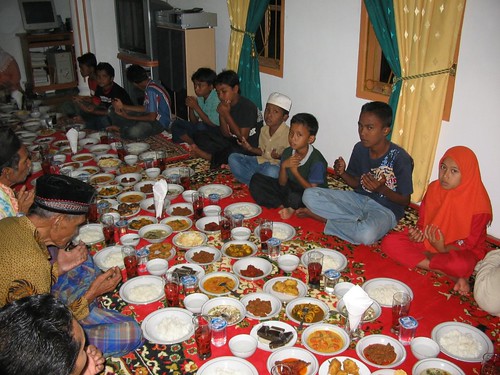
It is recommended that the person fasting breaks his fast (iftar) as soon as the sun
sets. Sahl Ibn Sa’d, may Allah be pleased with him, narrated that the Messenger of Allah, said: “The people will not cease to be upon good as long as they hasten in breaking the fast.” (Bukhari & Muslim)

3. BREAKING THE FAST WITH DATES

The Messenger of Allah, used to encourage the breaking of the fast with dates and if they were not available, then with water. Anas, may Allah be pleased with him, said: “The Messenger of Allah used to break the fast with fresh dates before praying, and if not with fresh dates then with old dates, and if not with dates then with some mouthfuls of water.” (Ahmad)

4. TO MAKE DU’A AT THE TIME OF BREAKING THE FAST

Abu Hurayrah, may Allah be pleased with him, narrated that the Messenger of Allah said: “Three supplications are answered: the supplication of the fasting person,
the supplication of the one who is oppressed and the supplication of the traveller.” (Ibn Majah)

Abu Hurayrah, may Allah be pleased with him, narrated that the Messenger of Allah said: “There are three whose supplications are not rejected: the fasting person when he breaks his fast, the just ruler and the supplication of the oppressed.” (Tirmidhi)

Indeed when the Messenger of Allah broke his fast, he used to say: “The thirst has gone, the veins are moistened and the reward is certain, if Allah wills.” (Abu Dawud)

5. INVITING OTHERS TO IFTAR

The Messenger of Allah said: “He who gives food for a fasting person to break fast, will receive the same reward as him, except that nothing will be reduced from the reward of the fasting person.” (Ahmad)

6. GENEROSITY AND STUDYING THE QUR’AN

It is recommended to be generous (in spending from one’s wealth) and to read the Quran at all times but especially in the month of Ramadan. Ibn Abbas, may Allah be pleased with him, said: “The Messenger of Allah was the most generous of all people especially in Ramadan when Jibra’il used to come to him. He used to meet Jibra’il on every night of Ramadan and study the Quran with him.” (Bukhari)

7. STRIVING IN WORSHIP OF THE LAST TEN DAYS OF RAMADAN

Aisha, may Allah be pleased with her, narrated that the Messenger of Allah said: “The Messenger of Allah used to exert himself in the last ten nights more than he would at other times.” (Muslim)

8. REFRAINING FROM ACTS WHICH ENDANGER THE FAST

One should refrain from every act which will endanger the fast and make it devoid of any rewards and benefits. The Messenger of Allah encouraged the Muslim who fasts to display noble manner; to be far from foul speech and evil actions; and abstain from rude and obscene talk. Two acts which should be carefully avoided in his month are falsehood and ignorant and indecent speech.

Abu Hurayrah, may Allah be pleased with him, narrated that the Messenger of Allah said: “Whoever does not abandon falsehood in word and action then Allah the Mighty and Majestic has no need that he should leave his food and drink.” (Bukhari)

In the context of indecent speech, Abu Hurayrah, may Allah be pleased with him, also narrated that the Messenger of Allah said: “Fasting is not [merely abstaining from eating and drinking, rather it is [abstaining] from ignorant and indecent speech, so if anyone abuses or behaves ignorantly with you, then say: ‘I am fasting, I am fasting.’” (Ibn Khuzaimah)

Source: Fasting & Ramadan: The Essentials, SM Hasan Al‐Banna

Importance of Waking Up for Suhoor


One of the more difficult acts to accomplish for many Muslims during Ramadan is waking up in the wee hours of the morning to have meals (Suhoor) before the onset of the fast.

In today's modern lifestyle, people have many responsibilities to deal with, in addition to the increased religious obligations. As a result, people are going to bed later. And they try to wake up, but fail. As a result, they feel guilty. And this feeling of guilt eats away at them, and prevents them from having a fulfilling Ramadan. Others yet rationalize that waking up for Suhoor is not at all practical given the time constraints faced by many in today's modern lifestyle. So they skip waking up for Suhoor intentionally. This latter group of people who rationalize not waking up for Suhoor are unfortunately wrong, and hopefully they will realize this soon enough.

Why? Prophet Muhammad's Sunnah is clear on the benefits of waking up for Suhoor.

The Prophet taught us through his own actions that there is barakah (blessings) in the early hours of the morning.

The Prophet said "Have suhoor, for in suhoor there is barakah" (Bukhari, Fath, 4/139).

Would you risk throwing away barakah that is available to you for an extra hour of sleep?

How To Get Barakah By Waking Up for Suhoor

1) Make a conscious effort to not waste time the night before by watching tv, surfing the Internet, or any other unnecessary or un-essential activity. If you do this consciously, you will find that you get to bed earlier, allowing you to sleep longer.

2) Wake up an hour before Fajr for quiet contemplation and remembrance of Allah, reading the Quran, making dua and prayer. This ensures that you gain the spiritual nourishment needed to sustain you throughout the day when you fast.

3) Some people argue that since they are not eating during Suhoor, they do not have to wake up. But keep in mind that waking up for Suhoor is not only about eating. Even if you are not hungry, take something light (a few dates, or a glass of low-fat milk). Then make your Subuh (morning) prayer. After that you may sleep for a bit more with a light heart, or start your day.

If you follow these steps, you will find it that meeting your obligations this Ramadan becomes increasingly easier on yourself.

This is not magic, or make-belief. This is Allah's Barakah at work!

“Baraka is the attachment of Divine Goodness to a thing, so if it occurs in something little, it increases it. And if it occurs in something much it benefits. And the greatest fruit of baraka in all things is to use it in the obedience of Allah, Exalted and Majestic.”


Wake Up for Suhoor And Begin Your Day of Fast With Joy

Hadith Sayings on Ramadan

To understand the full meaning of Ramadan as explained by Prophet Muhammad, please refer to the selected Hadith below.

40 Hadith Sayings on Ramadan


Hadith No. 01
Why the name 'Ramadan'?
The Holy Prophet (peace be upon him and his progeny) said: "Surely, the month of Ramadan has been named so because it scorches away the sins." Kanz al-Ummal, H: 23688

Hadith No. 02
Ramadan: The Name of God
Imam Sadiq (A.S.) has said: Say not, "This is Ramadan" and "Ramadan has departed" and "Ramadan has arrived" for surely, Ramadan is one of the names of Allah, The Mighty, the Glorious, who neither arrives nor departs. Surely, arrives and departs that, which is ephemeral, Instead say: "The month of Ramadan". Al-Kafi, 4, pg. 70

Hadith No. 03
Ramadan: The Month of Revelation of the Holy Quran
Imam Reza (A.S.) has said: If one asks, "Why is it that the fasts were made obligatory exclusively in the month of Ramadan and not in the other months?" it would be said, "(this is) because the month of Ramadan is the month in which Allah, the Exalted, had revealed the Holy Quran." Bihar al-Anwar, vol. 18, pg. 190

Hadith No. 04
Reward for Recitation of the Holy Quran during Ramadan
Imam Reza (A.S.) has said: "Someone who recites one verse from the Book of Allah, The Mighty, The Glorious, in the month of Ramadan, is like one who has recited the entire Holy Quran in the other months." Bihar al-Anwar, vol. 93, pg. 344

Hadith No. 05
Reward of the Month of Ramadan
The Holy Prophet (peace be upon him and his progeny) was asked: O' Prophet of Allah! Which of the two months possesses a greater reward, Rajab or the month of Ramadan? The Holy Prophet (peace be upon him and his progeny) replied: Nothing can be compared to the month of Ramadan in terms of reward. Bihar al-Anwar, vol. 97, pg. 49

Hadith No. 06
Ramadan: The Month of God
The Holy Prophet (peace be upon him and his progeny) said: Shaaban is my month and the month of Ramadan is the month of Allah, The Exalted, and it is the springtime for the poor. Bihar al-Anwar, vol. 97, pg. 68

Hadith No. 07
Ramadan: The Chosen Month
The Holy Prophet (peace be upon him and his progeny) said: Surely, Allah, The Mighty, The Glorious, has chosen from amongst the months (and granted preference to), the months of Rajab, Shaaban and the month of Ramadan. Bihar al-Anwar, vol. 27, pg. 53

Hadith No. 08
Ramadan: The Great Month
The Holy Prophet (peace be upon him and his progeny) said: Surely, the month of Ramadan is a great month. Allah multiplies in it the good deeds, erases in it the sins and elevates in it the ranks. Wasail al-Shia'h, vol. 10, pg. 312

Hadith No. 09
Ramadan: The Chief of the Months
Imam Ali (A.S.) said: The month of Ramadan has approached you. It is the chief of all months and the beginning of the year. Bihar al-Anwar, vol. 42, pg. 193

Hadith No. 10
Ramadan: The Beginning of the Year
Imam Sadiq (A.S.) said: If the month of Ramadan remains safe and sound (with respect to sins), the (entire) year shall remain so (too); the month of Ramadan is the beginning of the year. Wasail al-Shia'h vol.10, pg. 311

Hadith No. 11
Ramadan: The Month of Mercy
The Holy Prophet (peace be upon him and his progeny) has said: It (Ramadan) is the month, whose beginning is mercy, its middle, forgiveness and its end, emancipation from the fire (of hell). Bihar al-Anwar, vol. 93, pg. 342

Hadith No. 12
Excellence of the Month of Ramadan
The Holy Prophet (peace be upon him and his progeny) said: O' People! Surely, the month of God has approached you. The month which, in the eyes of Allah, is the most virtuous of the months. Its days are the best of the days and its nights, the best of the nights and its moments, the best of the moments. Bihar al-Anwar, vol. 96, pg. 356

Hadith No. 13
Ramadan: The Best of the Months
Imam Sadiq (A.S.) said: The best of the months is the month of God - the month of Ramadan - and the heart of the month of Ramadan is the Night of Qadr (Lailatul Qadr). Bihar al-Anwar, vol. pg. 386

Hadith No. 14
The Night of Qadr
The Holy Prophet (peace be upon him and his progeny) said: O' People! Surely, a great and blessed month has enveloped you. A month, in which there is a night, deeds in which are better than of a thousand months. Bihar al-Anwar, vol.96, pg. 342

Hadith No. 15
Gift of Allah's Month
The Holy Prophet (peace be upon him and his progeny) said: Your breath in it glorification (of Allah) and your sleep in it worship (of Allah). Bihar al-Anwar, vol. 96, pg. 356

Hadith No. 16
Fasts of the Month of Ramadan
The Holy Prophet (peace be upon him and his progeny) said: The month of Ramadan is the month in which Allah, The Mighty, The Glorious, has made fasting obligatory upon you. So one, who fasts in this month in a state of belief and with the intention of recompense, shall become free of his sins just as he was on the day when his mother gave him birth. Tahdheeb al-Ahkam, vol. 4, pg. 152

Hadith No. 17
Ramadan: The Month of Spiritual Striving
In his testament to his sons, Imam Sadiq (A.S.) said: When the month of Ramadan arrives, exert yourselves, for surely it is in this month that livelihood is distributed, the hour of death is ordained and the arriving for Hajj is decreed. In it is a night, deeds in which are better than deeds in a thousand months. Al-Kafi, vol. 4, pg. 66

Hadith No. 18
Ramadan: The Month of Good Deeds
The Holy Prophet (peace be upon him and his progeny) said: This month of yours (Ramadan) is unlike the other months. Surely, when it approaches you, it does so with blessings and mercy and when it turns away from you, it does so with forgiveness of sins. This is a month in which good deeds are multiplied and of goodness accepted. Wasail al-Shia'h, vol. 10, pg. 312

Hadith No. 19
Ramadan: The Blessed Month
The Holy Prophet (peace be upon him and his progeny) has said: Surely, the month of Ramadan, the blessed month, has come to you. The month, whose fasts Allah has made obligatory upon you. In it, the doors of Paradise are opened up and the Satan's fettered, and in it is the Night of Qadr, which is more virtuous than a thousand months. Tahdheeb al-Ahkam, vol. 4, pg. 152

Hadith No. 20
The Month of Ramadan and Seeking Forgiveness
Imam Ali (A.S.) said: It is incumbent upon you to seek forgiveness and supplicate excessively in the month of Ramadan. As for the supplication, by means of it the calamities are warded off from you, and as for the seeking of forgiveness, it erases away your sins. Al-Kafi, vol. 4, pg. 88

Hadith No. 21
Opening of the doors of Paradise
The Holy Prophet (peace be upon him and his progeny) said: In it (the month of Ramadan) the doors of Hell are closed and the doors of Paradise opened. Bihar al-Anwar, vol. 96, pg. 363

Hadith No. 22
The Month of Ramadan and Itikaf
Imam Sadiq (A.S.) has said: The Holy Prophet (peace be upon him and his progeny), initially observed the Itikaf (spiritual retreat) during the first ten days of the month of Ramadan. Later, he observed it during the middle ten days of the holy month and finally, he observed it during the last 10 days of the month and then continued to do so in the last ten days (for as long as he was alive). Bihar al-Anwar, vol. 16, pg. 274

Hadith No. 23
The Month of Ramadan and Divine Books
Imam Sadiq (A.S.) said: The Torah was revealed on the sixth day of the month of Ramadan, the Bible, on the twelfth night of the month, the Paslms on the eighteenth night of the month and the Quran on the Night of Qadr. Al-Kafi, vol. 4, pg. 157

Hadith No. 24
The Best Deed of the Month of Ramadan
During the course of a sermon of the Holy Prophet (peace be upon him and his progeny) about the virtues of the month of Ramadan. Imam Ali (A.S.) says: I stood up and asked: O' Prophet of Allah! What is the best deed for this month? The Holy Prophet (peace be upon him and his progeny) replied: O' Abul-Hasan! The best deed for this month is abstinence from that which is forbidden by Allah, The Mighty, The Glorious. Bihar al-Anwar, vol. 42, pg. 190

Hadith No. 25
Losers of the Month of Ramadan
The Holy Prophet (peace be upon him and his progeny) said: One who perceives the month of Ramadan and (does not strive in it and hence) is not forgiven, Allah distances him from Himself. Bihar al-Anwar, vol. 74, pg. 74

Hadith No. 26
Imam Sajjad (A.S.) and the Month of Ramadan
Imam Sadiq (A.S.) said: With the advent of the month of Ramadan, Imam Ali Ibn al-Hussain (A.S.) would cease to speak about anything except dua, tasbeeh (glorification of Allah), isteghfar (seeking forgiveness) and takbeer (saying 'Allahu Akbar'). Al-Kafi, vol. 4, pg. 88

Hadith No. 27
Fridays of the Month of Ramadan
Imam Baqir (A.S.) has said: Surely, the Fridays of the month of Ramadan possess an excellence over the Fridays of the other months, just as the Holy Prophet (peace be upon him and his progeny) possesses an excellence over the other prophets. Bihar al-Anwar, vol. 69, pg. 376

Hadith No. 28
Seven Excellences of Ramadan Fasting
The Holy Prophet (peace be upon him and his progeny) has stated: There is no Mu'min, who fasts for a day in the month of Ramadan with the intention of attaining its rewards, except that Allah, The Exalted, grants him seven excellences:

The forbidden food that had entered into his body melts away.
He moves closer to the Mercy of Allah, The Exalted.
Allah expiates his sins.
Allah reduces for him the agony of death.
Allah protects him from the hunger and thirst of the Day of Judgment.
He is granted pardon from the fire (of Hell).
Allah provides him the good and pleasant food of Paradise.
Mustadrak al-Wasaail al-Shia'h, vol. 7, pg. 395

Hadith No. 29
Ramadan: The Month of Patience
The Holy Prophet (peace be upon him and his progeny) said: And it (the month of Ramadan) is the month of patience, and surely, the reward of patience is Paradise. Al-Kafi, vol. 4, pg. 66

Hadith No. 30
Giving Charity
Imam Sadiq (A.S.) has said: Allah shall ward off 70 kinds of calamities from one who gives charity in the month of Ramadan. Wasaail al-Shia'h, vol. 9, pg. 404

Hadith No. 31
Reward of an Obligatory Act
The Holy Prophet (peace be upon him and his progeny) has stated: (The rewards of) one, who performs in it (the month of Ramadan) a single act from amongst the obligatory (wajib) acts of Allah, would be like (that of) one, who has performed seventy obligatory acts in the other months. Wasaail al-Shia'h, vol. 10, pg. 307

Hadith No. 32
Night of Decree
Imam Baqir (A.S.) said: In the Night of Qadr is decreed every thing - pleasant and unpleasant, obedience and disobedience, birth and death, and livelihood - which would occur during the course of that year, till the next Night of Qadr. Al-Kafi, vol. 4, pg. 157

Hadith No. 33
Increase Prayers in the Month of Ramadan
Imam Sadiq (A.S.) has said: With the advent of the month of Ramadan, the Messenger of Allah (peace be upon him and his progeny) would increase his Prayers (Salaat); I also increase mine and so, (you) increase yours (too). Tahdheeb al-Akhaam, vol. 3, pg. 60

Hadith No. 34
Eating of sahur
The Holy Prophet (peace be upon him and his progeny) has said: Eat your 'sahur' (the morning meal before the start of a fast) even if it is (mere) mouthfuls of water, for the blessings of Allah are upon those who eat the sahur. Tahdheeb al-Akhaam, vol. 4, pg. 198

Hadith No. 35
Hunger and Thirst of the Day of Judgment
Imam Ali (A.S.) said: Bring to mind, by means of your hunger and thirst in it (the month of Ramadan), the hunger and thirst of the Day of Judgment. Bihar al-Anwar, vol. 93, pg. 356

Hadith No. 36
The Call of Allah
Abdullah Ibn al-Abbas Ibn Abd al-Muttalib reports that he heard the Holy Prophet (peace be upon him and his progeny) say: Every night, in the month of Ramadan, Allah, The Blessed and The Exalted, calls out three times: Is there one, who seeks from Me, so that I grant him his wish? Is there one, who turns to me in repentance so that I turn to him (in Mercy)? Is there one, who seeks forgiveness from Me so that I forgive him? Mustadrak al-Wasaail, vol. 7, pg. 429

Hadith No. 37
Ghusl (ablution) on Night of Qadr
Imam Musa Ibn Ja'far (A.S.) said: One, who performs the ghusl on the Night of Qadr and remains awake in it (engaged in worship), shall have all his sins forgiven. Wasaail al-Shia'h, vol. 10, pg. 358

Hadith No. 38
Shield of a Believing Servant
Allah, The Mighty and The Glorious has said: The fasts are the shield of the believing servants on the Day of Judgment, just as your weapons shield you in this world. Wasaail al-Shia'h, vol.10, pg. 403

Hadith No. 39
Iftaar for Mu'min
The Holy Prophet (peace be upon him and his progeny) said: One who provides iftaar to a Mu'min in the month of Ramadan, shall be granted the reward of liberating a slave (in the path of Allah) and shall have all his previous sins forgiven. And if he did not possess the means to present anything except milk mixed with water, or a drink of sweet water and a date, Allah would grant him this reward. Bihar al-Anwar, vol. 93, pg. 317

Hadith No. 40
Farewell to the Month of Ramadan
The Holy Prophet (peace be upon him and his progeny) prayed: O' God! Ordain not this month of Ramadan to be the last one for my fasts. But should you ordain it to be so, then make me blessed and leave me not deprived (of Your mercy). Badaabi Az Quran, pg. 398

Source: http://www.ezsoftech.com

Breaking of The Fast


Break the fast with some dates or other fruits or a cup of water.

The Prophet himself emphasised the importance of breaking the fast this way, when he said: “If one of you is fasting, let him end his fast by eating a few dates, and if dates are not available, then let him drink some water. Water purifies.” (Ahmad & Tirmidhi).

While hurrying to pray the Maghrib (sunset) salaah, you should not forget to terminate the fast first. Anas reported that: “the Prophet used to end his fast with eating a few dates before offering Maghrib prayers. If no dates were available, he would sip some water.” (Abu Dawud).

What if you are very hungry and the food is ready?

If you are sure your mind will be on the already prepared meal, then you are advised to eat your food before embarking on Maghrib prayer. Anas quoted the Prophet as saying: “If your evening meal is served, then start by eating before offering Maghrib. Do not hasten to pray before eating.” (Bukhari & Muslim)

Only problem is that your Maghrib will be delayed, so don’t make it a habit. Islam is simple and realistic. It is a balance or realities and its all to our benefit; because our worship or fasts do not nourish Him. Indeed, Allah desires ease and success for us.

“Say: ‘Verily, my Lord has guided me to a way that is straight, - a religion of right,- the path (trod) by Abraham the true in Faith, and he (certainly) joined not gods with Allah’.” Qur'an 6 verse 161.

The Prophet (peace be upon him) said, “The (Hell) Fire is surrounded by all kinds of desires and passions, while Paradise is surrounded by all kinds of disliked undesirable things.” (Bukhari)
My Ping in TotalPing.com

Sexy Nude Celebrity Hot Female Celebrity